TL;DR: A good restoration estimate visit has three markers: the company shows up quickly, treats the property carefully while assessing it, and leaves behind a clear, reasonable quote. That holds true whether you own the home or you’re a tenant whose landlord makes the final call.
Most restoration reviews come from homeowners who hired the company and lived through the whole job. This one is different. Kim was renting the property when damage occurred, PuroClean of East Las Vegas came out to assess it and provide an estimate, and the landlord ultimately chose a different company to do the work. Kim left a five-star review anyway, because what actually happened during that visit still mattered.
Our experience was great! They responded quickly, they were respectful of the property, and very friendly! Unfortunately we lived in a rental and the homeowner chose not to use PuroClean. I felt the estimate was reasonable that was given. , Kim, verified Google review
What does “responded quickly” actually mean for an estimate visit?
A quick response means the company gets someone qualified on-site to assess the damage without the homeowner or tenant having to chase them down for days. For a renter like Kim, that speed matters even more, since damage sitting unaddressed can get worse while everyone figures out who’s paying for it.
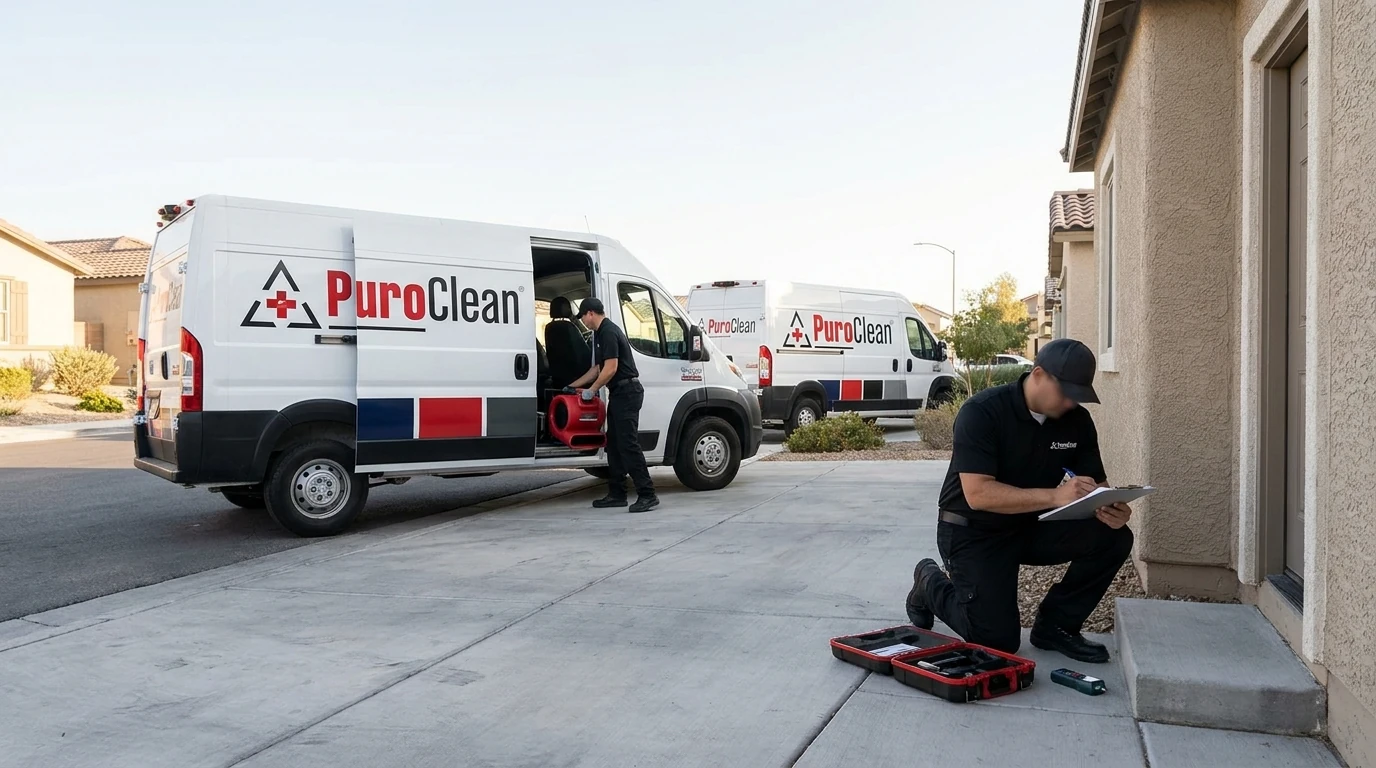
An estimate visit isn’t just a walk-through. The technician is documenting the extent of the damage, checking moisture levels or air quality where relevant, and building the scope of work that becomes the actual estimate. Showing up promptly signals the company treats an assessment call with the same urgency as an active job, not as an afterthought squeezed in between paying customers.
Why does “respectful of the property” matter during an assessment, not just the repair?
Respecting the property during an estimate means the technician moves through the space carefully, protects flooring and belongings, and doesn’t create new mess while documenting the old one. This is easy to overlook because the actual restoration work hasn’t started yet, but the assessment still involves walking through affected rooms, sometimes lifting materials to check for hidden moisture, and photographing damage up close.
A technician who tracks debris across carpet, moves furniture without asking, or handles a tenant’s belongings carelessly leaves a bad impression before a single job is booked. Kim noticing this detail, in a home that wasn’t even hers, says something about how the visit was actually conducted rather than how it was supposed to go on paper.
Who actually decides which restoration company gets hired on a rental property?
On a rental property, the property owner, or their insurance carrier, typically has the final say on which restoration company does the work, not the tenant living there. Kim’s review makes that dynamic explicit: she experienced the estimate firsthand, but the homeowner made the final vendor decision.
That split is common. Tenants are usually the first to notice damage and the first to deal with the disruption, but the contract for repairs is between the property owner (or their insurer) and the restoration company. If you’re renting and dealing with water, fire, mold, or other damage, the most useful thing you can do is document what you see, report it to your landlord immediately in writing, and ask to be kept in the loop on which company is coming and when. You generally cannot authorize the work yourself, but you can make sure the process moves.
For homeowners and landlords comparing bids in this situation, our guide on how to choose a restoration company walks through what separates a solid estimate from a rushed one, useful reading before signing with anyone.
What makes an estimate “reasonable” instead of inflated or vague?
A reasonable estimate is itemized, tied to a documented scope of the actual damage, and doesn’t include vague line items or padded contingencies. Kim’s comment that the estimate felt fair, even though she had no financial stake in the job, suggests the number matched what she’d actually seen during the walk-through, not a figure pulled out of thin air.
A written scope should spell out what’s being addressed (affected materials, square footage, equipment needed) and roughly why the number is what it is. That’s the standard we hold ourselves to at PuroClean of East Las Vegas: every estimate follows a documented assessment first, not the other way around. Every property and every loss is different, so we provide a written scope before any work begins rather than a ballpark figure over the phone.
What should you do if you’re dealing with damage in a home you rent?
Start by documenting the damage with photos and a written description, then notify your landlord or property manager the same day. Ask which restoration company they’re using and when the assessment is scheduled, so you’re not caught off guard by a crew showing up unannounced.
If you have any influence over which company gets the call, ask about response time, what the estimate visit will include, and whether the scope will be in writing. Those three questions tend to separate companies that treat an assessment seriously from ones that don’t.
Whether you own the property or you’re renting it, a restoration company’s behavior during the very first visit tells you most of what you need to know. Request an estimate and see for yourself how the assessment is handled before any decision gets made.
About PuroClean of East Las Vegas
PuroClean of East Las Vegas serves Las Vegas, Henderson, North Las Vegas, and the surrounding Clark County area with water, fire, mold, sewage, and biohazard restoration services. Each PuroClean office is independently owned and operated. Some services may not be available in all offices.