
Sewage backup is one of the few home emergencies where the instinct to grab rubber gloves and a mop can genuinely make you sick. Raw sewage, whether it’s backing up through a floor drain, a toilet, or a utility sink, contains a cocktail of bacteria, viruses, and parasites that don’t become safe just because the water looks murky rather than visibly brown. If you’re standing in front of a flooded basement right now trying to decide whether to clean it yourself, the short answer is: don’t. Here’s exactly why, and what to do instead.
What’s Actually in Sewage Backup (It’s Worse Than You Think)
Municipal sewage and household blackwater aren’t just dirty water. They’re classified as Category 3 water, the highest contamination tier in the IICRC’s water damage standards, because they carry pathogens capable of causing serious illness even through indirect contact.
The short list of what you’re dealing with:
- Bacteria: E. coli, Salmonella, Shigella, and Campylobacter are common. E. coli O157:H7 can cause kidney failure. Shigella spreads through surfaces and hands, not just ingestion.
- Viruses: Hepatitis A and norovirus survive on hard surfaces for days to weeks. Norovirus is notoriously difficult to kill, standard household bleach dilutions often aren’t enough at the concentrations most people mix.
- Parasites: Cryptosporidium and Giardia are shed in human feces and are resistant to many disinfectants.
- Hydrogen sulfide gas: The rotten-egg smell that comes with sewage isn’t just unpleasant, at elevated concentrations in enclosed spaces like basements or crawl spaces, it can cause dizziness, nausea, and respiratory irritation within minutes.
In Las Vegas, the problem is compounded by the climate. Summer temperatures routinely push past 105°F, and a warm, damp basement or utility room becomes a bacterial incubator within hours. What might be a manageable contamination zone at 65°F in a cooler climate can reach dangerous pathogen levels much faster here.
The Mistakes People Make in the First 30 Minutes
Most DIY sewage cleanup attempts go wrong immediately, before the person even picks up a mop. Here’s what to avoid:
Running the HVAC system. The moment you turn on a fan or your air handler, you’re pulling aerosolized sewage particles through your ductwork and redistributing them to every room in the house. Turn your HVAC off at the thermostat and leave it off until a professional has assessed the space.
Using a shop vac without a HEPA filter. Standard wet-dry vacuums exhaust air out the back. Without a true HEPA filter, you’re vacuuming up contaminated water and blowing a fine mist of pathogens into the air you’re breathing.
Assuming the visible area is the full extent. Sewage water wicks into drywall, insulation, subflooring, and wall cavities fast, especially in older Las Vegas homes with concrete slab construction, where water can travel laterally under flooring for 20 feet or more before you see it surface. What looks like a contained puddle in a utility room can mean saturated drywall behind three walls.
Touching your face, eating, or drinking in or near the affected area. This sounds obvious but it happens constantly. Pathogens transfer from contaminated surfaces to hands to mouth. If you’ve been in the area at all, wash your hands thoroughly before touching anything else.
Throwing away materials before documenting them. If you have homeowner’s insurance, removing or discarding affected materials before an adjuster or restoration professional documents them can complicate or void your claim.
What You Can Safely Do Before Professionals Arrive
There are a few actions that are both safe and genuinely helpful:
- Stop the source if you can do so without entering the contaminated area. If the backup is coming from a toilet, turn off the water supply valve at the base of the toilet. If it’s a main line backup, call your utility (NV Energy handles gas; for sewer line issues, contact the City of Las Vegas or Clark County depending on your address) to rule out a municipal blockage.
- Open windows and exterior doors to ventilate the space, but only if you can do so without walking through the contaminated area.
- Move unaffected valuables away from the perimeter of the wet area if you can reach them without stepping in the water.
- Photograph everything from the doorway before anything is moved or touched. Wide shots, close-ups of the water line on walls, and photos of any visible damage to flooring or cabinetry.
- Call your insurance company to open a claim. Most policies cover sudden sewage backup events, though coverage varies, some require a separate sewage backup rider.
Do not attempt to mop, squeegee, or extract the water yourself.
Why Professional Equipment Isn’t Optional Here
Professional sewage remediation isn’t just about having better mops. The process involves several steps that require specialized equipment and training that genuinely can’t be replicated with hardware-store supplies:
Containment: Technicians establish negative air pressure in the affected zone using air scrubbers with HEPA filtration, which prevents cross-contamination to unaffected parts of the home during the cleanup process.
Extraction and controlled demolition: Truck-mounted extraction units remove water at volumes and speeds that shop vacs can’t match. Saturated drywall, insulation, and flooring often need to be removed, not because they look bad, but because porous materials that have absorbed Category 3 water cannot be reliably disinfected in place.
Antimicrobial treatment: EPA-registered disinfectants applied at the correct dwell times to non-porous surfaces. This is different from spraying bleach water and wiping it up, dwell time (how long the disinfectant stays wet on the surface) is critical to pathogen kill rates.
Moisture mapping and drying verification: Thermal imaging and moisture meters confirm that structural materials have returned to acceptable moisture levels before any reconstruction begins. Skipping this step is the most common reason mold shows up 2–3 weeks after a cleanup, the surface looked dry, but the subfloor or wall cavity wasn’t.
The Timeline That Matters: Mold Starts Fast
One reason the first 24–48 hours are critical: mold colonization can begin on wet organic materials (drywall paper, wood framing, carpet backing) in as little as 24 to 48 hours under the right conditions. In a Las Vegas summer, those conditions exist almost immediately.
A sewage backup that’s properly extracted and dried within 24–48 hours is unlikely to produce a secondary mold problem. The same backup left for 72 hours, or improperly dried with consumer fans, frequently does. At that point, you’re not dealing with one remediation job; you’re dealing with two.
When to Call a Professional
If there is any standing water, any affected area larger than a few square feet, or any involvement of structural materials (drywall, subfloor, insulation), this is not a DIY situation. The health risk is real, the equipment gap is real, and the downstream consequences of incomplete cleanup, mold, lingering odor, failed insurance claims, are real.
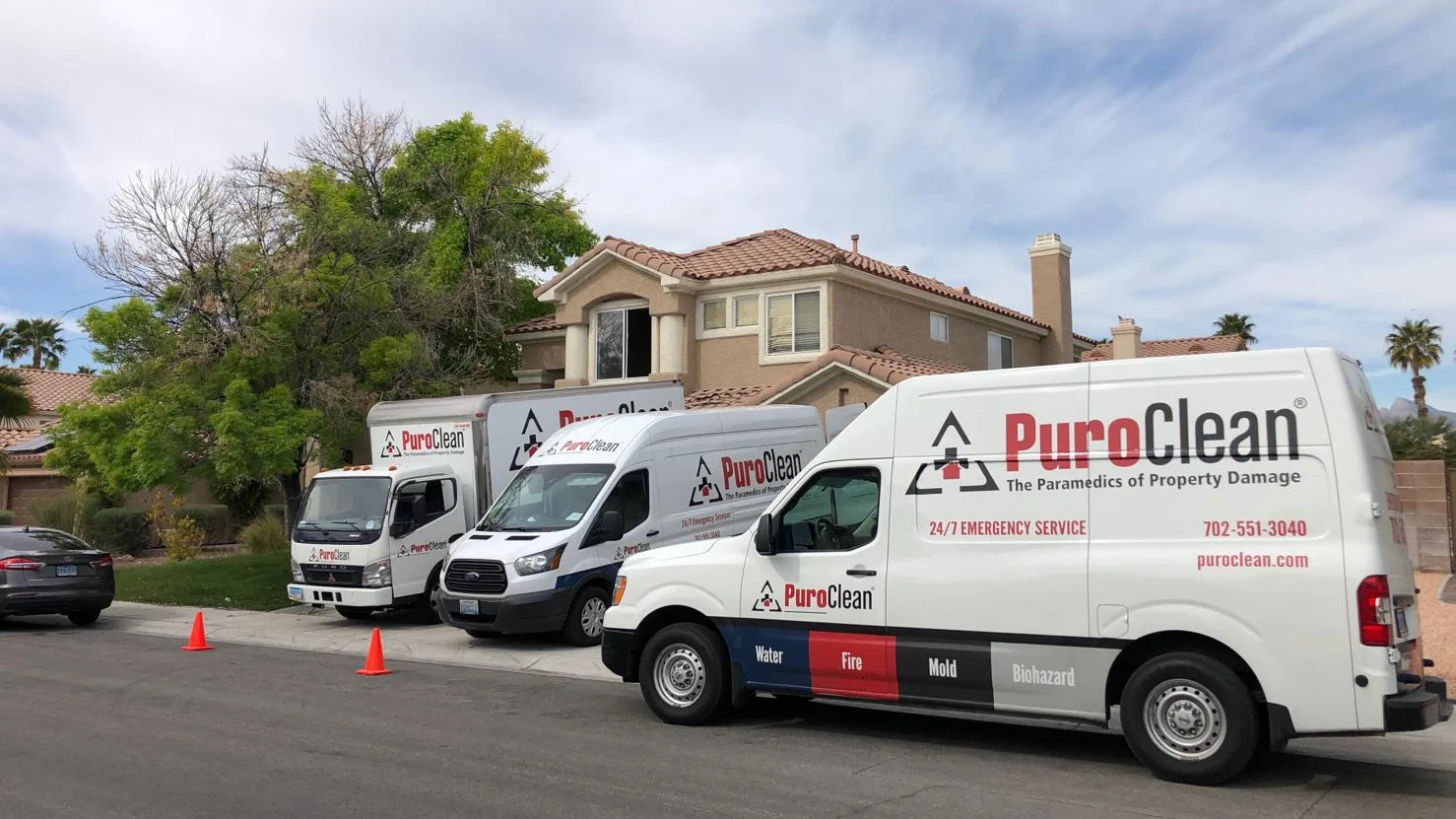
PuroClean of East Las Vegas handles sewage cleanup and Category 3 water damage for homeowners and property managers throughout the east Las Vegas valley. If you’re dealing with a backup right now, call (702) 551-3040, the team can walk you through what to do while you wait and get the documentation started for your insurance claim.