TL;DR: Trauma and crime scene cleanup (biohazard remediation) is the process of safely removing blood, bodily fluids, and other potentially infectious materials from a property after a death, injury, or violent incident. It requires specialized PPE, EPA-registered disinfectants, and proper disposal of regulated medical waste, work that falls outside what police, coroners, or family members are equipped or expected to handle. Most homeowners insurance policies cover it under trauma or crime scene cleanup provisions.
If you’re reading this after a loss in your home or a family member’s property, you are likely overwhelmed and trying to figure out who even handles this kind of thing. Whether the incident happened in a Historic District bungalow near Hoover Dam or a newer home in Lake Mountain Estates, the cleanup process is the same: a trained crew arrives, assesses what’s affected, and removes and disinfects everything that poses a health risk, so you and your family don’t have to.
What Is Trauma and Crime Scene Cleanup?
Trauma and crime scene cleanup is the removal and decontamination of blood, bodily fluids, and other biohazard materials from a residence, vehicle, or commercial space, following strict safety and disposal protocols. It covers situations like unattended deaths, suicides, violent crimes, and serious accidents.
This isn’t the same as general cleaning. Blood and bodily fluids can carry bloodborne pathogens such as Hepatitis B, Hepatitis C, and HIV, and the Occupational Safety and Health Administration (OSHA) regulates how these materials must be handled, from PPE requirements to waste disposal. Untrained cleanup also misses what’s absorbed into subflooring, baseboards, and wall cavities, which is where lingering odor and contamination usually come from.
The IICRC publishes a specific standard, S540, for trauma and crime scene decontamination. It outlines containment procedures, which materials must be removed versus disinfected, and how to verify a space is safe to re-occupy. A qualified crew works from that framework rather than guessing at what’s “clean enough.”
What Happens During a Professional Biohazard Cleanup?
A professional response starts with a site assessment, then moves through containment, removal, disinfection, and verification, in that order, before the space is cleared for normal use. Most residential jobs take one to three days depending on scope.
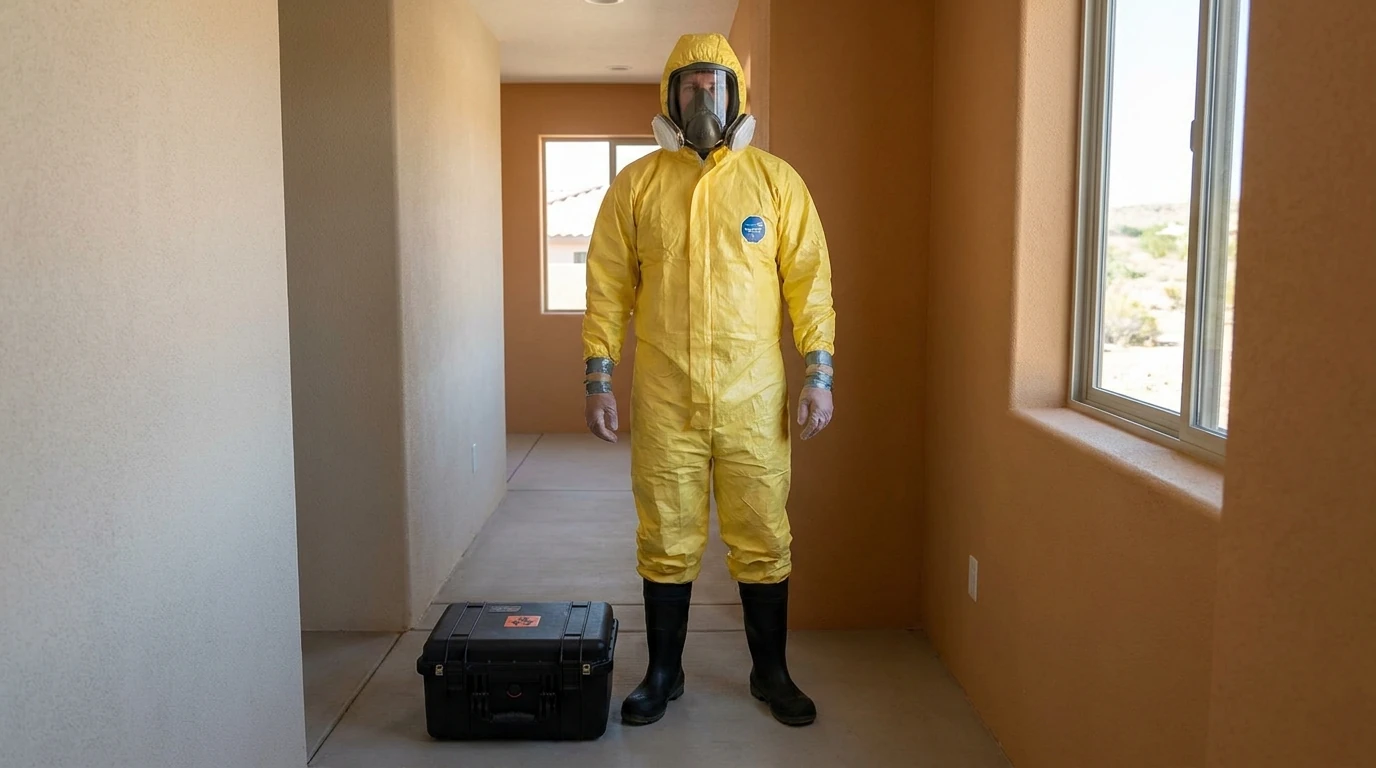
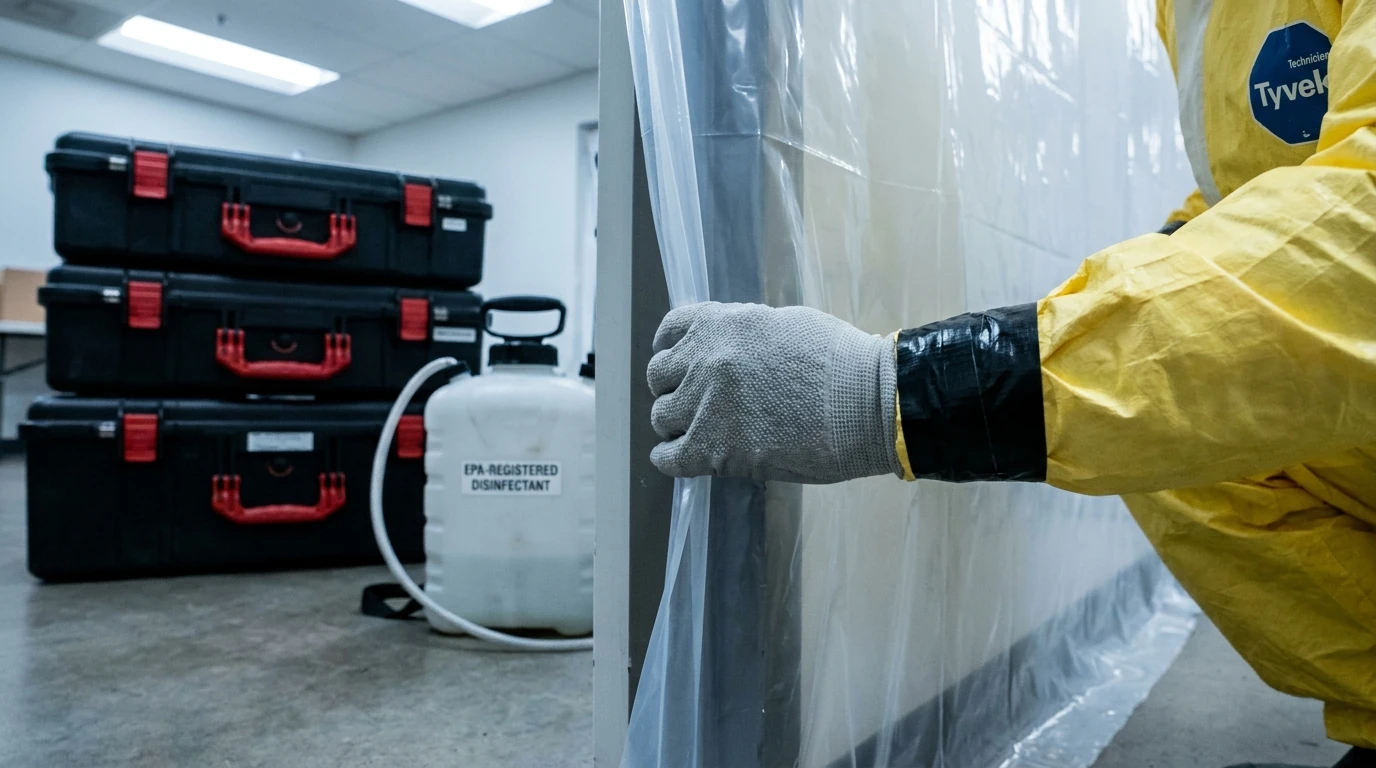
The technician arrives in full protective gear: a sealed coverall, full-face respirator, and taped gloves and boots, because the work itself requires it, not for show. They first isolate the affected area with containment barriers to keep contamination from spreading to unaffected rooms. Porous materials that can’t be fully disinfected, carpet, drywall, subfloor sections, upholstery, are removed and bagged as regulated medical waste for transport to a licensed disposal facility. Non-porous surfaces are cleaned with EPA-registered disinfectants rated for bloodborne pathogens, then re-tested before the area is released.
Contents in the affected area (furniture, personal items, electronics) are evaluated separately. Some can be cleaned and restored; others can’t be safely salvaged. If you’ve already looked into what happens to belongings after an incident like this, our contents restoration and storage team handles that piece alongside the biohazard remediation, so you’re not coordinating two separate companies.
Who Pays for Trauma Scene Cleanup, Insurance or Me?
Most standard homeowners and renters insurance policies include coverage for trauma and crime scene cleanup, often listed separately from water or fire damage coverage. Coverage amounts and deductibles vary by policy, so it’s worth confirming with your carrier before work begins.
What typically happens is this: the restoration company documents the affected areas with photos, a written scope of work, and an itemized estimate, then submits that directly to your adjuster. Because biohazard cleanup is billed as a specialty service, having clear, standard-based documentation (tied to S540 procedures rather than vague line items) tends to move claims along faster. Keep in mind every policy and every incident is different, and a written scope before any work starts protects you either way, whether insurance covers all of it, part of it, or none.
If the incident also affected plumbing or caused water damage, for example from a delayed discovery, those damages are typically evaluated and billed separately under water damage restoration or sewage cleanup, depending on what’s involved. Our unattended death cleanup article goes deeper into what families in the Las Vegas valley can expect from that specific scenario, including timing and discretion.
What Should I Do (And Not Do) Before Help Arrives?
The single most important thing to do is stay out of the affected area and avoid attempting any cleanup yourself. Bloodborne pathogens aren’t always visible, and household cleaning products aren’t designed to neutralize them.
If the incident is still active or just occurred, contact law enforcement or emergency services first, they’ll clear the scene before any restoration work can begin. Once the scene is released, avoid touching, moving, or disposing of any items in the affected area, even things that look unaffected. Photograph the area if you’re comfortable doing so (useful for insurance documentation), but don’t attempt to clean, scrub, or deodorize anything.
It’s also reasonable to ask the responding company how they handle disposal, what disinfectants they use, and whether they document the job to S540 standards. A company that can answer those questions clearly is one that treats this the way it should be treated: as regulated, procedural work, not a deep clean with stronger chemicals.
Homes throughout Boulder City, from the Historic District to Del Prado, often have older plumbing and layouts that complicate containment, so an in-person assessment matters more here than a phone estimate ever could. Scheduling that assessment is the fastest way to get a clear answer on scope, timeline, and what your insurance is likely to cover.
This kind of loss is never something you plan for, and the cleanup itself is the one part of it that a trained crew can take off your hands completely.
About PuroClean of East Las Vegas
PuroClean of East Las Vegas serves the greater Las Vegas valley, including Henderson, North Las Vegas, and Boulder City, with biohazard cleanup, water damage restoration, fire restoration, mold remediation, and related property restoration services. Their crews follow IICRC-recognized procedures for trauma and crime scene decontamination and work directly with insurance adjusters to document each job from assessment through final clearance.