
Stop the water first, then worry about everything else. If a pipe burst, find your main shutoff valve, usually near the water meter or where the main line enters the house, and turn it off. If an appliance failed, pull its supply line valve. Once the source is controlled, you have a narrow window to limit how far the damage spreads. Water moves fast: it soaks into drywall within minutes, reaches wall cavities within an hour, and can create conditions for mold growth within 24 to 48 hours. Here is what to do, in order.
Step 1, Stop the Source and Make the Area Safe
Before you touch anything, think about electricity. Water and live circuits are a serious hazard, so if the flooded area is near an outlet, a panel, or any appliance that was running, cut power to that zone at the breaker box before you walk through standing water. If you cannot safely reach the breaker, stay out and call a professional.
Once you know the area is electrically safe:
- Shut off the water source, main valve, appliance valve, or toilet shutoff, whichever applies.
- Open windows and interior doors if outdoor humidity is lower than indoor humidity (Las Vegas summers are dry enough that outside air often helps; monsoon season is the exception).
- Move valuables, documents, and electronics to a dry room. Wet paper and electronics degrade within hours.
- Lift area rugs and small furniture off wet flooring, dye from rugs can permanently stain hardwood or tile grout, and furniture legs left in standing water will swell and warp.
Do not run a standard household vacuum over standing water. It is not designed for that and creates an electrocution risk.
Step 2, Document Everything Before You Clean Up
Insurance adjusters work from evidence. Before you move a single piece of wet furniture or pull up a section of flooring, photograph and video the scene from multiple angles. This takes ten minutes and can save you thousands of dollars in a disputed claim.
Capture:
- The water source (the burst pipe, the overflow point, the failed appliance)
- The extent of standing water, including how far it has traveled across the floor
- Every wall, baseboard, and ceiling showing discoloration or saturation
- The serial number and model of any damaged appliance
- Any pre-existing conditions you want excluded from the claim (a stain that was already there, for example)
Save the photos to cloud storage immediately, wet phones and laptops have a way of dying at the worst moment.
Step 3, Remove Standing Water and Begin Drying
Time is the variable that determines how much of your home is salvageable. Every hour of standing water is another hour of absorption into subfloor, wall framing, and insulation.
If the volume of water is small, a slow leak that soaked one corner of a bathroom, a wet-dry shop vac and several fans can make a real dent. If you are looking at more than a thin film across a room, you are past the point where consumer tools keep up.
Practical steps for moderate water:
- Use a wet-dry vac to extract as much standing water as possible, emptying it frequently.
- Place box fans to move air across wet surfaces, airflow accelerates evaporation.
- Run your HVAC system on a normal cooling cycle; the air handler pulls moisture out of the air as it cools it. (In Las Vegas, your AC is already working hard in summer, let it help.)
- Place towels or mop heads against baseboards to absorb water wicking up from the floor edge.
What you cannot see matters as much as what you can. If water reached the wall cavity, which happens whenever a baseboard gets saturated, the framing and insulation behind the drywall are holding moisture that fans cannot reach from the surface. This is the zone where mold colonizes silently.
What NOT to Do in the First 24 Hours
Some common instincts make the situation worse:
- Do not use a standard household dehumidifier as your only drying tool after significant flooding. Residential dehumidifiers are sized for ambient humidity control, not for pulling gallons of water out of structural materials. They will run continuously, overheat, and barely move the needle.
- Do not replace drywall or flooring before confirming moisture levels. Sealing wet materials behind new finishes traps moisture and creates ideal mold conditions. Restoration technicians use moisture meters and thermal cameras to find hidden saturation before anything is closed up.
- Do not throw away damaged materials before your adjuster or a restoration contractor documents them. Discarding items before they are logged can complicate your claim.
- Do not assume it dried because it looks dry. Concrete, hardwood, and drywall can look surface-dry while holding significant moisture inside. A visual check is not enough.
- Do not run ceiling fans if the ceiling above them is wet. A saturated ceiling can collapse under its own weight.
When to Call a Water Damage Restoration Professional
Some situations are clearly beyond DIY management. Call a professional immediately if:
- Standing water covers more than one room or has reached multiple floors
- The water source was a toilet overflow, sewage backup, or drain backup (this is Category 3 water, contaminated, and requires protective equipment and specialized disposal)
- Water has been sitting for more than a few hours before you discovered it
- You can smell a musty or earthy odor, mold can begin colonizing porous materials in as little as 24 to 48 hours under the right conditions
- You see discoloration or bubbling on walls or ceilings that suggests water is inside the wall cavity
- Your home was built before 1980 and has disturbed drywall or flooring, older Las Vegas homes may contain asbestos-containing materials that require specific handling
Professional water damage restoration involves industrial extractors, desiccant or refrigerant dehumidifiers, and air movers that move far more volume than consumer equipment. Technicians also use moisture mapping to track drying progress across multiple days and confirm that structural materials have reached acceptable levels before reconstruction begins.
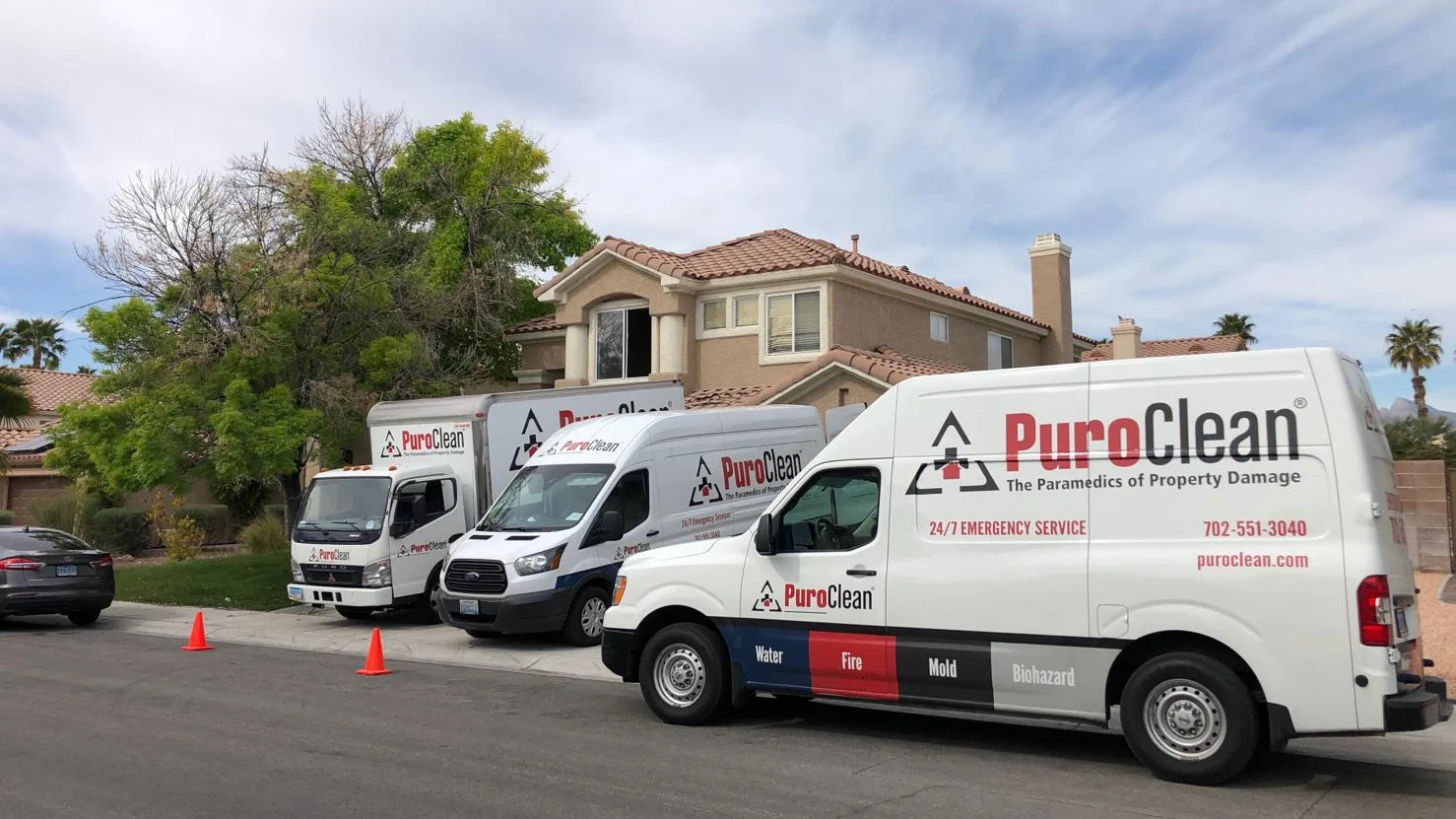
PuroClean of East Las Vegas handles water damage restoration for homes and commercial properties throughout the east valley. If you are unsure whether your situation needs professional help, a call to (702) 551-3040 costs nothing and can help you make an informed decision.
The Days After: What the Recovery Process Looks Like
Even after standing water is gone and surfaces feel dry, the recovery process continues. Structural drying, getting wall framing, subfloor, and concrete slab to acceptable moisture content, typically takes three to five days with professional equipment running continuously, sometimes longer depending on the materials and how long water was present.
During that window:
- Expect loud equipment running continuously. Industrial air movers are not quiet.
- Expect daily or every-other-day moisture readings to track progress.
- Do not close doors to rooms being dried, airflow needs a path.
- Keep pets and children away from equipment.
Once drying is confirmed, reconstruction can begin: replacing drywall, flooring, insulation, and any cabinetry that could not be salvaged. Most homeowner’s insurance policies cover sudden and accidental water damage, though coverage varies, your policy documents and your adjuster will clarify what applies to your specific loss.
The first 24 hours set the trajectory for everything that follows. Moving quickly on extraction and drying is the single biggest factor in keeping a manageable water event from becoming a months-long reconstruction project.
Video Transcript
Water damage moves fast. In the first 24 hours, the choices you make determine how much of your home you can save. First priority: stop the water. Find your main shutoff valve near the water meter and turn it off immediately. Before entering a flooded room, cut power at the breaker box. Water near live circuits is extremely dangerous. Document everything before cleaning up. Photograph the source, standing water, every wet wall, and all damaged appliances. This protects your insurance claim. Move rugs, furniture, and valuables to dry rooms right away. Rug dye can permanently stain floors within hours. Use a wet-dry shop vac to pull up standing water. Run fans across wet surfaces and let your AC help pull moisture from the air. What you cannot see is the real threat. Water inside wall cavities creates hidden mold within 24 to 48 hours. Never assume it is dry because it looks dry. Professionals use moisture meters and thermal cameras to find hidden saturation. If water covers multiple rooms, smells musty, or came from a sewage backup, stop and call a restoration professional immediately. Don’t wait. Call PuroClean of East Las Vegas at 702-551-3040 for a free estimate and fast emergency response.