TL;DR: A standard Nevada homeowners (HO-3) policy covers storm damage that enters through wind, hail, or a storm-created opening in the roof or siding, but it excludes floodwater that rises from the ground, including Clark County’s monsoon flash flooding. Replacement cost coverage pays to rebuild at today’s prices; actual cash value coverage, more common on wind and hail endorsements, factors in depreciation first. The source of the water, not the fact that a storm caused it, decides whether the claim gets paid.
If a monsoon cell just tore through the valley and water is pooling under a window or spreading across a ceiling, you need an answer today, not a lecture on insurance theory. Here’s the practical version of what a Nevada homeowners policy pays for after a storm, what it won’t touch, and how to document the damage so the claim doesn’t stall.
Does Homeowners Insurance Cover Storm Damage in Nevada?
Most standard Nevada homeowners policies, written on the HO-3 form, cover storm damage caused by wind, hail, and the rain that follows a wind-created opening into your home. They exclude floodwater that rises from the ground outside and then enters the structure, no matter how directly a storm caused it.
A shingle torn loose by 50 mph gusts that lets rain into the attic: that’s a covered wind loss. A wash overflowing two blocks away and sending water across your yard and under your front door: that’s flood, and it’s excluded from virtually every standard homeowners policy, a point the Nevada Division of Insurance addresses directly for homeowners who assume storm-caused automatically means covered.
Clark County’s monsoon season, roughly July through September, produces exactly this confusion every year. A storm hits, a wash floods, water reaches a home, and the homeowner files a claim expecting it to be treated like any other storm loss. It usually isn’t.
What’s the Difference Between Wind-Driven Rain and a Flood, for Insurance Purposes?
Wind-driven rain is water that enters through an opening the storm itself created, like a torn shingle, a blown-out window, or wind-lifted flashing. A flood is surface water that rises and enters a structure at or near ground level, and covering it requires a separate flood policy, typically through the National Flood Insurance Program.
An adjuster determines which category applies partly by where the water line starts and how it moved through the structure. Water that came through the roof and worked its way down drywall reads differently than water that pooled on the slab and wicked up the baseboards. That distinction is exactly what gets documented during a professional water damage restoration assessment, and it’s worth having in writing before the adjuster’s visit rather than after.
If your property sits near a wash, a retention basin, or a low point in a Clark County neighborhood, an NFIP policy is worth pricing even outside a mapped high-risk zone. Monsoon flash flooding doesn’t respect FEMA flood maps the way people assume it does.
For the water-damage coverage questions that come up outside of storms specifically, our companion piece, Does Homeowners Insurance Cover Water Damage?, breaks down the sudden-versus-gradual distinction insurers apply to leaks and pipe failures.
How Do You Document a Storm Damage Claim?
Document storm damage with timestamped photos of both the damage and its cause, a written timeline of when the storm hit and when you noticed the damage, and your claim number before any repairs begin.
A few specifics that protect a claim:
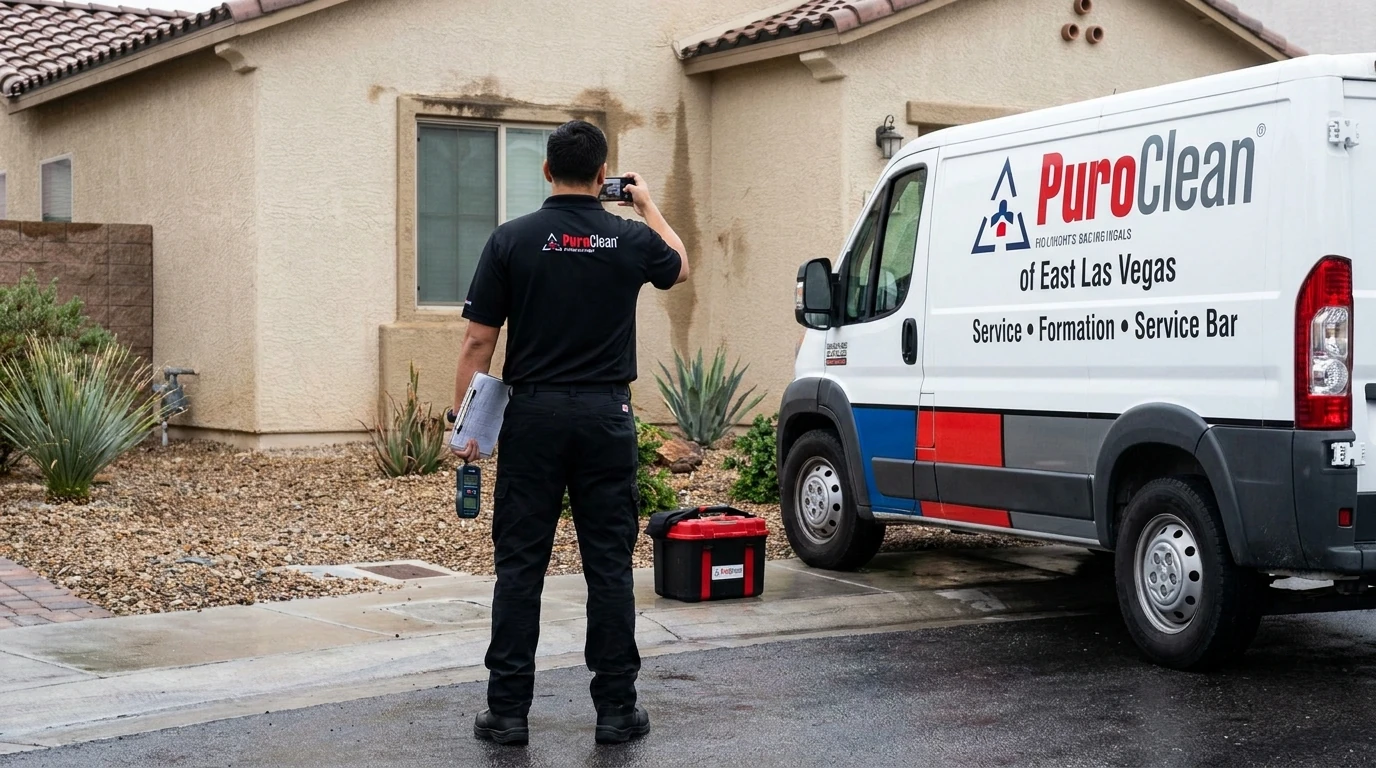
- Photograph exterior and interior damage before moving anything, including roof damage if it’s safe to view from the ground.
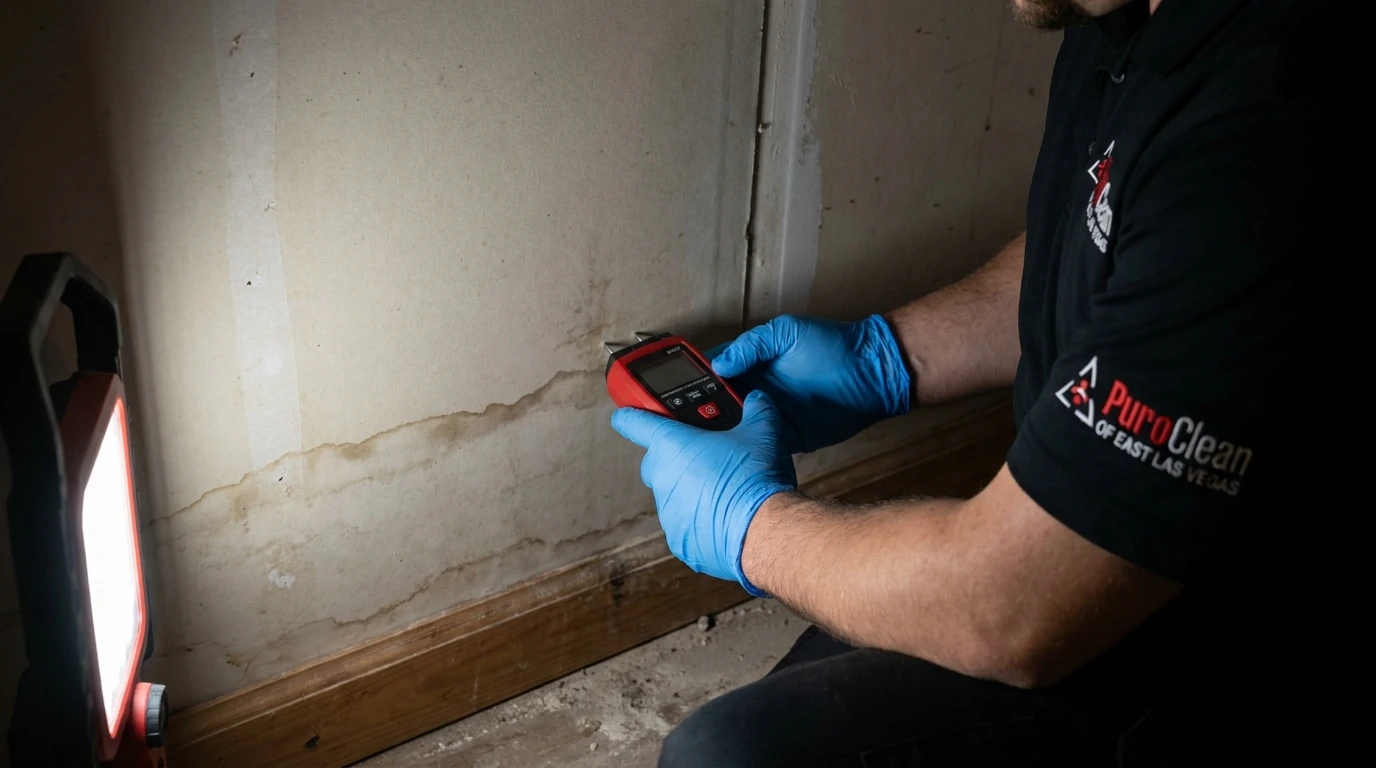
- Photograph the water line or high-water mark on walls and flooring. Adjusters use this to judge source and depth.
- Hold onto damaged materials (cut-out drywall, carpet samples) until the adjuster inspects, unless they’re a mold or safety hazard.
- Pull your policy’s declarations page so you know your deductible and whether you carry actual cash value or replacement cost coverage.
- File notice promptly. Most policies don’t give you months to decide.
Our storm damage insurance claim checklist walks through this in more detail if you want a printable version before you call your carrier.
How Do You Avoid a Storm Damage Claim Denial?
Most storm damage denials come down to three things: the water gets classified as flood instead of wind-driven rain, mitigation was delayed long enough that mold or secondary damage set in, or the damage gets attributed to pre-existing wear rather than the storm.
That second point matters more than most homeowners realize. Nearly every policy includes a duty-to-mitigate clause, requiring the policyholder to take reasonable steps to prevent further damage once a loss occurs, like tarping a roof or extracting standing water. If drying doesn’t start promptly and mold develops, an insurer can argue that secondary damage was preventable and deny that portion of the claim. That’s the gap a same-week mold remediation response is built to close, and it’s why scheduling extraction and drying quickly protects both the house and the paperwork.
The Insurance Information Institute has a plain explanation of how deductibles and claim math work if you want to understand what you’re actually on the hook for before repairs start.
What Should You Do First After Storm Damage Hits Your Home?
Stop additional water intrusion if it’s safe to do so, photograph everything, call your insurer to open a claim, and schedule a water damage assessment before tearing out materials yourself.
Tarp an obvious hole or move contents off a wet floor if you can do it without climbing onto a damaged roof or wading through standing water near electrical outlets. Then get the documentation above in hand and request a written scope from whoever inspects the damage, restoration crew or insurance adjuster, before anything gets demolished. If you’re in the Las Vegas area, our Las Vegas water damage restoration team can get that assessment started quickly.
A storm claim that’s well documented from the first hour moves faster and gets questioned less. PuroClean of East Las Vegas handles the mitigation and documentation side of that process so the insurance conversation has fewer gaps to argue about.
About PuroClean of East Las Vegas
PuroClean of East Las Vegas provides water damage restoration, mold remediation, fire damage restoration, sewage cleanup, and related mitigation services across Las Vegas, Henderson, North Las Vegas, and the surrounding Clark County area, available 24/7. The company holds a 4.9 average rating across 21 Google reviews from local customers. This post was prepared with input from Gregory Arianoff.
Need help now? Call PuroClean of East Las Vegas at +17025513040.