
TL;DR: After a house fire in Sunrise Manor, the first step is securing the property and calling a certified fire damage restoration company. A professional crew will board up openings, extract water left by firefighting, remove soot and smoke residue, and dry the structure before rebuilding begins. Most homeowners insurance policies cover fire damage restoration, including smoke and water cleanup. The full process typically takes 2 to 8 weeks depending on the severity of the loss.
If you are standing in front of a smoke-damaged home in Nellis Meadows or waiting for the fire marshal to clear your property near Sunrise Vista, the hours right after a fire are the most consequential. What you do, and who you call, in the first 24 to 48 hours shapes how much of your home and contents can be saved. This guide walks you through exactly what fire damage restoration looks like in Sunrise Manor, how the insurance process works, and what a professional crew actually does on-site.
What does fire damage restoration actually involve?
Fire damage restoration is the full process of cleaning, drying, deodorizing, and rebuilding a property after a fire. It covers four distinct types of damage: structural char and heat damage, soot and smoke residue on surfaces and inside HVAC systems, water damage from firefighting hoses and sprinklers, and odor that penetrates drywall, insulation, and wood framing.
Most homeowners picture the charred walls and assume that is the main problem. In practice, smoke and water are often more destructive than the fire itself. Soot is acidic. Left on metal fixtures, appliances, or electronics for more than 72 hours, it begins to corrode. Water from suppression soaks into subfloors and wall cavities, creating ideal conditions for mold growth within 24 to 48 hours, according to IICRC S500 standards. A restoration crew addresses all four damage types in sequence, not just the visible burn area.
The scope of work on a typical Sunrise Manor residential loss includes:
- Emergency board-up and roof tarping to secure the structure
- Water extraction and structural drying using LGR dehumidifiers and air movers
- Dry-ice blasting or chemical sponge cleaning of soot from framing and surfaces
- HEPA air scrubbing to remove airborne particulates
- Thermal fogging or hydroxyl treatment for smoke odor
- Contents pack-out and restoration for salvageable belongings
- Reconstruction of damaged structural elements, drywall, flooring, and finishes
What should you do in the first 24 hours after a fire in Sunrise Manor?
In the first 24 hours, your three priorities are safety, documentation, and mitigation. Do not re-enter the property until the fire department has cleared it. Once cleared, photograph every room before touching anything, including ceilings, floors, and the exterior. That documentation protects your insurance claim.
Call your insurance company to open a claim, then call a restoration company. The order matters: your insurer needs to know a loss occurred, but you do not need their approval before starting emergency mitigation. Most policies require you to take reasonable steps to prevent further damage, which means boarding up broken windows and extracting standing water right away, not waiting for an adjuster.
Here is what the first 24 hours should look like:
- Confirm fire department clearance before entry
- Photograph all damage from every angle before disturbing anything
- Call your insurance company to open the claim
- Call a certified restoration company for emergency board-up and water extraction
- Secure temporary housing if the structure is uninhabitable
- Retrieve essential documents and medications if safe to do so
For a detailed checklist on the first hours after a property emergency, see our guide on what to do in the first 24 hours after water damage, which covers documentation and mitigation steps that apply equally to fire losses.
How does insurance cover fire damage restoration in Nevada?
Most standard homeowners insurance policies in Nevada cover fire damage restoration, including the water and smoke damage that comes with it. Your dwelling coverage pays for structural repairs. Your personal property coverage pays for damaged contents. Additional living expenses coverage pays for temporary housing while your home is being restored.
The Nevada Division of Insurance requires insurers to acknowledge a claim within 10 working days and accept or deny it within 30 working days of receiving proof of loss. In practice, an adjuster will schedule an inspection within a few days of your call.
A few things that affect your claim outcome:
- Documentation quality. Photos and video taken before any cleanup begins are the single most important factor. Adjusters rely on this evidence to scope the loss.
- Written scope of work. A restoration company should provide a line-item estimate using Xactimate, the industry-standard estimating platform. This gives the adjuster a verifiable scope to work from.
- Proof of mitigation. If you delayed calling a restoration company and secondary damage (mold, further structural deterioration) occurred, the insurer may dispute those costs. Acting quickly protects the full claim.
- Policy exclusions. Arson, vacancy clauses, and certain types of intentional damage are excluded. Accidental fires, electrical fires, and appliance fires are almost always covered.
For a deeper look at how fire restoration costs break down in Nevada, see our fire damage restoration cost guide for NV.
What does the fire damage restoration process look like from start to finish?
The restoration process follows a defined sequence. Understanding each phase helps you set realistic expectations and ask the right questions when reviewing a contractor’s scope.
Phase 1: Emergency stabilization (Day 1-2). The crew boards up windows and doors, tarps any roof penetrations, and extracts standing water. This stops further damage and makes the structure safe to work in.
Phase 2: Assessment and scoping (Day 2-4). A project manager walks the entire structure, documents damage with photos and moisture readings, and produces a written scope of work. This is the document your insurance adjuster will review.
Phase 3: Demolition and cleaning (Week 1-2). Charred and unsalvageable materials are removed. Soot is cleaned from framing, subfloors, and surfaces using dry-chemical sponges, HEPA vacuums, and, on heavy char, dry-ice blasting. Contents are inventoried and either cleaned on-site or packed out for off-site restoration and storage.
Phase 4: Drying and deodorization (Week 1-3). Even after water extraction, structural materials hold moisture. LGR dehumidifiers and air movers run continuously, with moisture readings logged daily until the structure reaches dry standard per IICRC S500. Thermal foggers or hydroxyl generators run simultaneously to neutralize smoke odor at the molecular level.
Phase 5: Reconstruction (Week 2-8). Once the structure is clean and dry, rebuilding begins. New drywall, insulation, flooring, paint, and fixtures are installed to pre-loss condition. The timeline depends on the extent of structural damage and permit requirements from Clark County.
For a full breakdown of each restoration phase, our post on the fire damage restoration process goes into technical detail on cleaning methods and drying protocols.
Why does Sunrise Manor have specific fire risk factors worth knowing?
Sunrise Manor’s housing stock skews toward mid-century single-family homes, many built in the 1960s and 1970s along the East Charleston corridor and near Nellis Meadows. These homes frequently have original wiring, older HVAC systems, and attic insulation that does not meet current fire-resistance standards. Electrical fires are among the most common loss types in this housing stock.
The area’s proximity to Nellis Air Force Base also means a significant share of renters and property managers who may not be as familiar with local insurance requirements or restoration protocols. If you are managing a rental property near Sunrise Vista or the Whitney Ranch border, the documentation and mitigation steps above apply equally, and your landlord policy likely has different coverage terms than a standard homeowners policy.
Las Vegas’s desert climate also means that once a fire is out, the dry air accelerates soot bonding to surfaces. The 72-hour window for preventing permanent soot corrosion is tighter in low-humidity conditions than in more temperate climates. Calling a restoration crew the same day the fire marshal clears the property is not an overreaction.
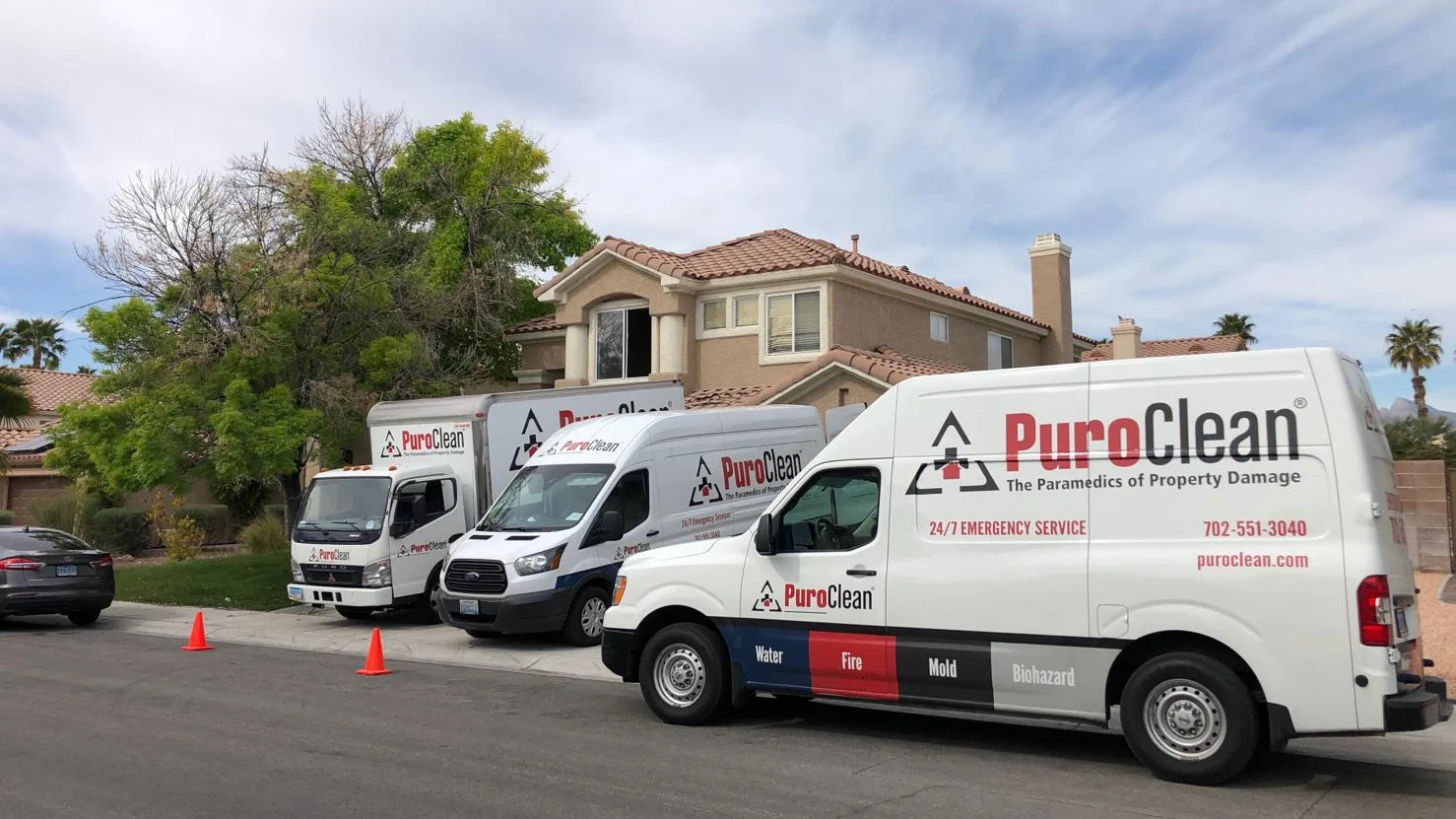
PuroClean of East Las Vegas serves Sunrise Manor as home turf for the East Las Vegas team, with fast drive times to neighborhoods near Sunrise Mountain and along the East Charleston corridor. Their crews handle fire damage restoration, contents restoration and pack-out, and water damage restoration from the same base, so the same team that boards up your property can carry the job through to reconstruction.
To schedule a fire damage assessment or get a written scope of work, call PuroClean of East Las Vegas at (702) 551-3040.
About PuroClean of East Las Vegas
PuroClean of East Las Vegas is an IICRC-certified restoration company serving Sunrise Manor, Las Vegas, Henderson, North Las Vegas, and surrounding communities in Clark County, NV. Operating out of 2777 N Lamb Blvd (89115), their certified crews handle fire damage restoration, water damage restoration, mold remediation, sewage cleanup, biohazard cleanup, and contents restoration. Each PuroClean office is independently owned and operated. Some services may not be available in all offices.
Video Transcript
A house fire is one of the most overwhelming things a homeowner can face. But what you do in the next 24 hours makes all the difference. First, do not re-enter until the fire department clears the property. Once cleared, photograph every room before touching a single thing. Call your insurance company to open a claim right away. Then call a certified restoration company — you don’t need adjuster approval to start emergency work. Fire damage is actually four problems at once: char and heat, soot and smoke, water from firefighting, and deep odor inside walls and insulation. Soot is acidic and starts corroding metal within 72 hours. Water soaks into subfloors and can cause mold in as little as 24 to 48 hours. A certified crew boards up openings first, then extracts standing water using industrial equipment to stop secondary damage before it spreads. Next, industrial dehumidifiers and air movers dry the structure. HEPA scrubbers pull smoke particles from the air, and thermal fogging kills odor at the source. Your insurance covers most of this — structure, contents, and temporary housing. Strong documentation and a line-item estimate help protect your full claim. From board-up to full rebuild, most Sunrise Manor homes are restored in two to eight weeks depending on the severity of the damage. Don’t wait — every hour counts after a fire. Call PuroClean of East Las Vegas at 702-551-3040 for a free estimate today.